
+92306 3026 466
Competitor Backlink Analysis: How to Find and Replicate Your Competitor’s Best Links
Summarize this post
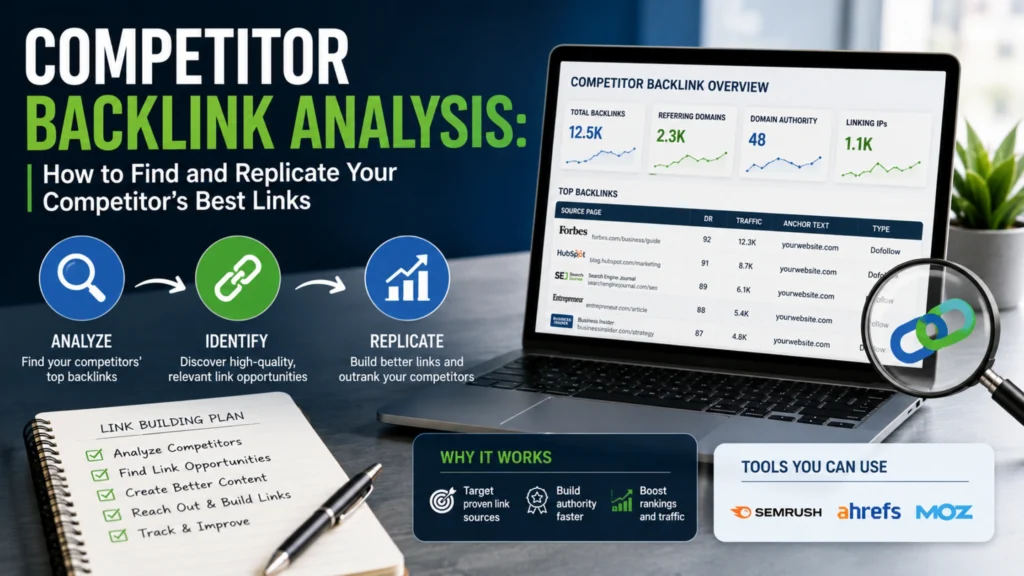
Competitor backlink analysis is the process of studying where your competitors get their backlinks from so you can identify realistic, high-value link opportunities for your own site. Using tools like Semrush, Ahrefs, or Ubersuggest, you export a competitor’s backlink profile, filter it for relevant and authoritative sources, then reach out to those same sites with your own content or pitch. At CodeFyze, this is one of the fastest ways we help client’s close visibility gaps without having to guess where to build links from scratch.
If you’ve ever wondered why a competitor consistently outranks you despite having similar content, the answer is often sitting in their backlink profile. This guide walks you through exactly how to find it, evaluate it, and use it to your advantage.
Why Competitor Backlink Analysis Matters
Building links from nothing is slow and often unpredictable. But when a competitor already ranks well, their backlink profile is proof of what already works in your industry, which publications link out, what kind of content earns links, and which sites are open to linking to businesses like yours.
This is why backlink gap analysis has become a standard part of any serious SEO strategy. Instead of guessing, you’re working from evidence.
Step 1: Identify the Right Competitors to Analyze
Before you check anyone’s backlinks, make sure you’re analyzing the right competitors. Focus on businesses that:
- Rank above you for your target keywords
- Operate in the same niche or industry
- Have a similar business size or service area (especially important for local businesses)
Analyzing a much bigger, unrelated brand’s backlinks usually waste time, since their link sources may not be realistic for your site to earn.
Step 2: Use the Right Tools to Find Competitor Backlinks
There are several reliable ways to find backlinks of competitors:
Semrush Backlink Checker: One of the most popular tools for this. Enter a competitor’s domain, and it shows referring domains, anchor text, and authority scores.
Ahrefs Site Explorer: Offers a detailed backlink gap tool that directly compares your domain against competitors and highlights sites linking to them but not to you.
Ubersuggest: A more budget-friendly option for smaller businesses that still gives a solid overview of referring domains and link quality.
Each of these tools answers the same core question: how to find competitor backlinks but the depth of data varies, so many agencies cross-check with more than one tool.
Step 3: Filter for Quality, Not Just Quantity
Once you check competitor backlinks, don’t chase every single link you see. Filter the list based on:
- Relevance is the linking site in a related industry or niche?
- Authority does the site have real traffic and credibility, not just a high number?
- Follow status dofollow links pass more direct SEO value, though nofollow links can still drive traffic and brand visibility
- Placement was the link placed naturally within content, or does it look like a paid or spammy insertion?
This filtering step is what separates a useful competitor backlink analysis from a wasted afternoon of exporting spreadsheets.
Step 4: Group Links by Opportunity Type
Once you’ve got a clean list, group the backlinks into categories:
- Guest post opportunities sites that accept contributed content
- Directory or citation listings especially useful for local businesses
- Resource pages that list helpful tools or services in your niche
- Editorial mentions news sites or blogs that mentioned a competitor organically
Grouping like this makes outreach far more efficient, since each category needs a slightly different pitch.
Step 5: Reach Out and Replicate (the Right Way)
Once you know where the opportunities are, the outreach itself matters just as much as the research. Personalize every email, reference the specific page you’d like to be listed or mentioned on, and offer something of clear value whether that’s better content, updated data, or a genuinely useful resource.
Avoid simply copying a competitor’s exact anchor text or pitch. Google’s systems, including AI-based evaluation, are good at spotting patterns that look automated or manipulative rather than genuine.
How CodeFyze Uses Competitor Backlink Analysis
At CodeFyze, competitor backlink analysis is one of the first steps in any new link building engagement. We don’t just export a list of links. we manually filter for relevance and authority, then build a prioritized outreach plan based on realistic opportunities. This approach consistently outperforms broad, untargeted outreach campaigns because every link we pursue already has evidence it can be earned.
Common Mistakes to Avoid
- Chasing every backlink a competitor has, regardless of quality
- Ignoring relevance in favor of high authority scores alone
- Copy-pasting outreach templates without personalization
- Only checking one competitor instead of a wider set
- Forgetting to check for toxic backlinks in a competitor’s profile before assuming it’s a good source to replicate
Final Thoughts
Competitor backlink analysis isn’t about copying, it’s about using real, existing evidence to build a smarter, faster link building strategy. By finding backlinks of competitors, filtering for genuine quality, and personalizing your outreach, you can close ranking gaps without wasting months on guesswork. If you’d rather have this research and outreach handled for you, CodeFyze offers full backlink analysis and link building services built around this exact process.
On this page
Related Topics
< FAQS >
No Confusion. Just Clarity.
Get quick, clear answers to everything you need to know about working with us.
- What is competitor backlink analysis?
Competitor backlink analysis is the process of studying the websites and pages that link to your competitors. It helps identify relevant link-building opportunities, understand which content attracts backlinks, and discover websites that may also be willing to link to your content.
- How do I find my competitors’ backlinks?
You can find competitors’ backlinks using tools such as Semrush, Ahrefs, Moz, or Ubersuggest. Enter a competitor’s domain into the tool’s backlink analysis section to view its referring domains, linked pages, anchor text, and individual backlinks.
- How do I find competitor backlinks in Semrush?
In Semrush, open Backlink Analytics, enter your competitor’s domain, and review its referring domains, backlinks, authority metrics, and top-linked pages. You can also use the Backlink Gap tool to compare your website with several competitors and find domains linking to them but not to you.
- What is backlink gap analysis?
Backlink gap analysis compares your website’s backlink profile with those of competing websites. It identifies websites that link to one or more competitors but do not link to you, helping you find relevant outreach and link-building opportunities.
- What is the best tool to check competitor backlinks?
Semrush and Ahrefs are widely used tools for competitor backlink analysis because they provide detailed information about referring domains, backlinks, anchor text, authority metrics, and link-growth trends. The best choice depends on your budget and the depth of analysis you need.

Related Blog Posts
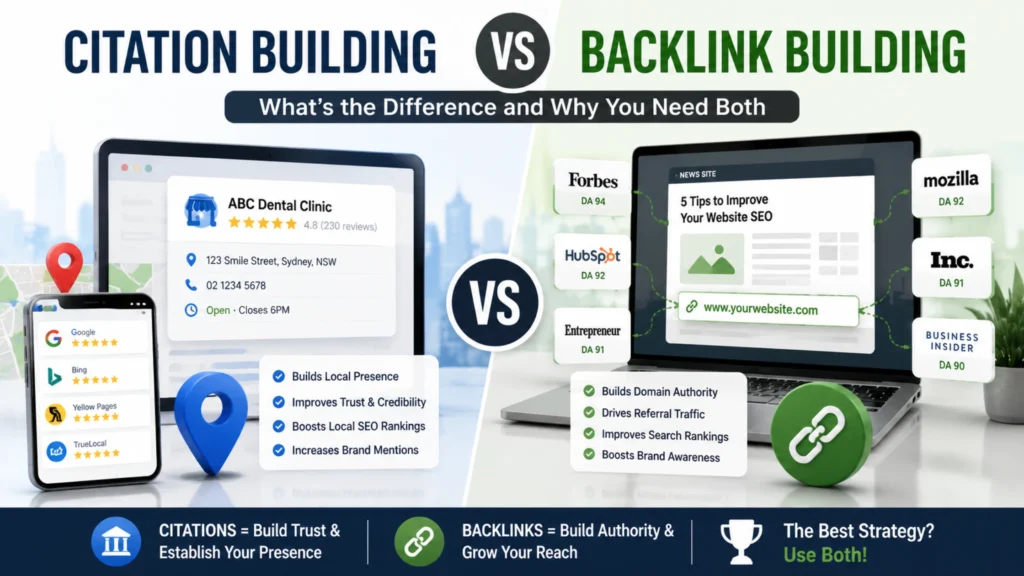
Citation Building vs Backlink Building: What’s the Difference and Why You Need Both
Citation building involves listing your business’s name, address, and phone number (NAP) consistently across online…

CodeFyze
July 29, 2026

HARO/Journalist Outreach: Getting Backlinks from News and Media Sites
HARO link building is the process of earning high-authority backlinks by responding to journalist queries…
CodeFyze
July 29, 2026

Voice Search Optimization: Writing Content People Actually Ask Out Loud
Voice search optimization is the process of structuring your website content to match how people…
CodeFyze
July 23, 2026
Questions? Reach us on Whatsapp +971 55 265 4401 Or Email info@codefyze.com
Questions? Reach us on Whatsapp +44 798 504 1813 Or Email info@codefyze.com
< recent blogs >
Latest Insights & Articles
Explore our latest articles, tips, and insights all in one place.
#BacklinkBuilding, #CitationBuilding, #CodeFyze, #DigitalMarketing, #GoogleBusinessProfile, #LocalSEO, #NAPCitations, #SEOStrategy
Citation Building vs Backlink Building: What’s the Difference and Why You Need Both
Citation building involves listing your business’s name, address, and phone number (NAP) consistently across online…

CodeFyze
July 29, 2026
#BacklinkStrategy, #CodeFyze, #ContentMarketing, #DigitalPR, #EEAT, #HARO, #JournalistOutreach, #LinkBuilding
HARO/Journalist Outreach: Getting Backlinks from News and Media Sites
HARO link building is the process of earning high-authority backlinks by responding to journalist queries…
CodeFyze
July 29, 2026
#AIOverview, #CodeFyze, #DigitalMarketing, #FeaturedSnippets, #LocalSEO, #SEO, #SEOTips, #VoiceSearch, #VoiceSearchSEO
Voice Search Optimization: Writing Content People Actually Ask Out Loud
Voice search optimization is the process of structuring your website content to match how people…
CodeFyze
July 23, 2026