
+92306 3026 466
Best SEO Tools for Keyword Research and Competitor Analysis in 2026

Summarize this post
What Are the Best SEO Tools for Keyword Research in 2026?
The best SEO keyword research tools in 2026 are Ahrefs, SEMrush, and Google Keyword Planner. Ahrefs leads for keyword exploration and backlink data, SEMrush excels at competitor analysis and all-in-one SEO intelligence, and Google Keyword Planner is the best free starting point for search volume data. For competitor keyword research specifically, SEMrush and Ahrefs are the two strongest options both let you see exactly which keywords your competitors rank for and where your biggest ranking opportunities are hiding.
Introduction
Every piece of content you publish is either targeting the right keywords or the wrong ones. There is not much middle ground.
Target keywords nobody searches for, and you get traffic that never comes. Target keywords that are too competitive and you get buried on page five where nobody clicks. Target the right keywords, the ones your audience actually uses, with competition you can realistically beat organic traffic compounds over time.
The difference between those outcomes almost always comes down to the quality of your keyword research and how well you understand what your competitors are doing. And that comes down to the tools you use.
At CodeFyze, we use SEO keyword research tools daily for our own content strategy and for the businesses we work with. In this guide we break down the best tools available in 2026, what each one does best, and exactly how to use them to find keywords worth targeting and gaps your competitors have left open.
Why Keyword Research Is Still the Foundation of SEO
With every Google algorithm update, some SEO tactics become obsolete. Keyword stuffing stopped working years ago. Exact-match anchor text manipulation lost its power. But keyword research has never stopped mattering if anything, it matters more now.
Google’s recent core updates and its shift toward semantic search and search intent mean that understanding what your audience is actually searching for and why is more critical than ever. Ranking is no longer just about having a keyword on a page. It is about having the most relevant, most useful answer to the specific question a searcher is asking.
Good keyword research tells you:
- Which topics your audience actually searches for and how often
- What search intent sits behind each query informational, commercial, transactional, or navigational
- How difficult it will be to rank for a given term based on current competition
- Which keywords your competitors rank for that you do not your content gaps
- Which long-tail keyword variations have lower competition but meaningful search volume
Without this data, your content strategy is guesswork. With it, every piece of content you create has a clear purpose and a realistic chance of ranking.
Best SEO Keyword Research Tools in 2026
1. Ahrefs — Best Overall SEO Keyword Research Tool
Ahrefs is widely regarded as the most powerful SEO keyword research tool available today. Its keyword database covers over 20 billion keywords across 200 countries, and its data accuracy particularly for search volume and keyword difficulty is consistently rated among the best in the industry.
What sets Ahrefs apart is the depth of data it provides around each keyword. You do not just get search volume, you get click-through rate data, the number of pages ranking for the keyword, SERP history showing how rankings have moved over time, and a detailed breakdown of what it would realistically take to rank on page one.
Ahrefs Keywords Explorer Key Features:
- Keyword difficulty score with realistic assessment of how many backlinks you would need to rank
- Search volume data for 200+ countries useful for international SEO strategy
- Clicks metric shows how many searches actually result in a click (important because many searches get answered in Google’s own SERP features without a click)
- Parent topic grouping shows the broader topic a keyword belongs to, helping you understand if multiple keywords can be targeted with one page
- SERP overview see exactly which pages rank for a keyword, their domain rating, and how many backlinks they have
- Keyword ideas related terms, questions, newly discovered keywords, and terms that also rank for the same pages
Ahrefs for Competitor Keyword Research:
Ahrefs’ Site Explorer is one of the best competitor keyword research tools available. Enter any competitor’s domain and you can see every keyword they rank for, their top-performing pages, estimated monthly traffic, and the backlinks driving their rankings. The Content Gap tool is particularly powerful; it shows you keywords where multiple competitors rank but your site does not, highlighting your most valuable content opportunities in one view.
Ahrefs Pricing:
Ahrefs starts at $129 per month for the Lite plan. A free Ahrefs Webmaster Tools account gives limited access to your own site’s keyword and backlink data, a useful starting point before committing to a paid plan.
2.SEMrush — Best for Competitor Analysis and All-in-One SEO
SEMrush is the most comprehensive all-in-one SEO platform available, and its competitor analysis capabilities are arguably the best in the market. Where Ahrefs has a slight edge in raw keyword data depth, SEMrush leads in the breadth of its competitive intelligence features and the variety of its toolset.
For businesses that want one platform to handle keyword research, competitor analysis, technical SEO auditing, rank tracking, content optimization, and PPC research SEMrush is the strongest single tool available.
SEMrush Keyword Research Features:
- Keyword Magic Tool: The most extensive keyword research interface in SEMrush enter a seed keyword and get thousands of related terms grouped by topic, filtered by search volume, keyword difficulty, search intent, and CPC
- Keyword Overview: Instant snapshot of any keyword volume, difficulty, intent, SERP features, trend data, and who currently ranks for it
- Keyword Gap: Enter your domain and up to four competitors instantly see keywords they rank for that you do not, organized by opportunity
- Position Tracking: Monitor your daily rankings for any set of keywords across locations and devices
- Organic Research: Full keyword profile for any domain see every keyword a competitor ranks for, their ranking position, estimated traffic, and traffic value
SEMrush Competitor Analysis — What Makes It Stand Out:
SEMrush competitor analysis is where the platform truly shines. The Organic Research tool lets you enter any competitor URL and immediately see their entire organic keyword footprint. You can filter by position (find their top-ranking keywords), by traffic (find which keywords actually drive the most visitors), and by keyword difficulty (find where they are ranking for terms you could realistically compete for).
The Market Explorer tool goes further; it maps your competitive landscape, showing you which sites compete with yours across multiple keyword clusters, their traffic share, and how that share has shifted over time. For businesses trying to understand their full competitive environment, not just one or two known competitors, this feature is invaluable.
SEMrush Pricing:
SEMrush Pro starts at $139.95 per month. A free account gives limited daily searches enough to explore the platform but not for serious ongoing research. SEMrush regularly offers trial periods which are worth using to evaluate the platform before committing.
3.Google Keyword Planner — Best Free Keyword Research Tool
Google Keyword Planner is Google’s own keyword research tool, built primarily for Google Ads users but genuinely useful for organic SEO research. It is free with a Google account and provides search volume data that comes directly from Google making it one of the most accurate sources for understanding how often people search for specific terms.
What Google Keyword Planner Does Well:
- Search volume ranges for any keyword directly from Google’s data
- Keyword ideas based on a seed keyword or website URL
- Seasonal trend data showing how search volume fluctuates month by month
- Geographic breakdown see search volume by country or region
- Competition level indicator (Low/Medium/High): useful as a rough SEO difficulty signal
Limitations of Google Keyword Planner for SEO:
Google Keyword Planner shows search volume ranges rather than exact numbers unless you have an active Google Ads campaign running. It is also designed for paid search, so its keyword suggestions lean toward commercial intent terms. For organic SEO research, it works best as a complement to Ahrefs or SEMrush rather than a standalone tool.
That said, for businesses starting out with zero budget for paid SEO tools, Google Keyword Planner combined with Google Search Console gives you a solid free foundation for keyword research.
4.Ubersuggest — Best Budget-Friendly Keyword Tool
Ubersuggest, created by Neil Patel, is a more affordable alternative to Ahrefs and SEMrush that covers the core keyword research and competitor analysis workflows at a fraction of the cost. It is a good entry-level tool for small businesses and individual site owners who need more than Google Keyword Planner but cannot yet justify the investment in a premium platform.
Ubersuggest Key Features:
- Keyword overview with search volume, SEO difficulty, paid difficulty, and CPC
- Keyword ideas and related questions
- Competitor domain analysis: see top pages and keywords for any domain
- Backlink data and site audit functionality
- Content ideas find top-performing content for any keyword
Ubersuggest Pricing:
Ubersuggest offers a limited free plan and paid plans starting at $29 per month. A lifetime deal is also available which makes it particularly cost-effective for individual users or small businesses.
5.Moz Keyword Explorer – Best for Keyword Prioritization
Moz Keyword Explorer is a focused, clean keyword research tool known for two things: its Priority score, which combines volume, difficulty, and organic CTR into a single actionable metric, and its excellent keyword list management features that make it easy to organize and prioritize large keyword sets.
Moz also pioneered Domain Authority (DA) , the most widely used metric for estimating a website’s ability to rank, which remains a standard reference point across the SEO industry.
Moz Keyword Explorer Key Features:
- Priority score: Combines search volume, difficulty, and CTR opportunity into one number that tells you which keywords are worth targeting first
- Keyword lists: Organize keywords into lists and track their rankings over time
- SERP analysis: Detailed breakdown of who ranks for a keyword and why
- Organic CTR curve: Shows how clicks are distributed across positions for a keyword
Moz Pricing:
Moz Pro starts at $99 per month with a 30-day free trial. The free MozBar browser extension is useful for quick on-page SEO checks and domain authority lookups while browsing the web.
6.AI Keyword Research Tools — The Emerging Category
AI keyword research is a fast-growing category in 2026, with tools like Surfer SEO, Clearscope, and built-in AI features in SEMrush and Ahrefs changing how keyword research and content optimization work together.
AI-powered tools add a layer of semantic analysis on top of traditional keyword research; they identify the related terms, topics, and questions that Google expects a comprehensive piece of content to cover, not just the primary keyword. This aligns directly with Google’s NLP-based ranking approach.
Notable AI Keyword and Content Tools:
1.Surfer SEO: Analyzes top-ranking pages for any keyword and tells you exactly how to structure and write your content to compete word count, headings, related terms, and NLP keywords
2.Clearscope: Content optimization platform that grades your content against top-ranking pages for a keyword using AI-powered semantic analysis
3.SEMrush AI Writing Assistant: Integrates keyword research directly into content creation with AI suggestions for optimization
4.ChatGPT and Claude for keyword ideation: Useful for generating seed keyword ideas, identifying search intent, and brainstorming long-tail variations best used as a starting point before validating with data from Ahrefs or SEMrush
AI keyword tools do not replace data-driven platforms like Ahrefs and SEMrush; they complement them. The combination of accurate keyword data and AI-powered content optimization is the strongest SEO workflow available in 2026.
How to Do Keyword Research Step by Step
Understanding the tools is one thing. Knowing how to use them in a structured workflow is what actually produces results. Here is the process we use at CodeFyze:
Step 1: Define Your Seed Keywords
Start with 5 to 10 broad terms that describe what your business does, what problems you solve, or what topics you want to be known for. These are your seed keywords the starting point for everything else. Do not overthink this step. If you build websites, your seeds might be ‘web development,’ ‘web design,’ ‘website builder,’ and ‘custom website.’
Step 2: Expand With a Keyword Research Tool
Enter your seed keywords into Ahrefs Keywords Explorer or SEMrush Keyword Magic Tool. For each seed, you will get hundreds or thousands of related terms. Filter by search volume (minimum 100 searches per month for most niches) and keyword difficulty (start with KD under 30 if you are a newer site, under 50 if you have some authority).
Step 3: Analyze Search Intent
For every keyword you consider targeting, look at the current top-ranking pages. Are they blog posts, product pages, comparison articles, or definitions? That is your signal for what type of content Google wants to see for that query. Creating the wrong content type, a product page for an informational query, for example: will limit your ranking potential regardless of how good your content is.
Step 4: Run Competitor Keyword Analysis
Enter your top two or three competitors into Ahrefs Site Explorer or SEMrush Organic Research. Find the keywords they rank for in positions 1–20. Then run a Content Gap or Keyword Gap analysis to find terms they rank for that you do not. This list is your highest-priority content opportunity. These are proven terms with proven search demand that you have not yet addressed.
Step 5: Build a Keyword Map
Assign each target keyword to a specific page on your site. Every page should have one primary keyword and three to five supporting keywords. No two pages should target the same primary keyword; this causes keyword cannibalization, where your own pages compete against each other and neither ranks as well as it could.
Step 6: Track and Iterate
Set up rank tracking in SEMrush or Ahrefs for your target keywords. Review rankings monthly. Update pages that have dropped, strengthen internal links to pages you want to push higher, and add new content to cover gaps as you find them. SEO keyword research is not a one-time task, it is an ongoing cycle.
Quick Tool Comparison: Which SEO Keyword Research Tool Should You Use?
Ahrefs → Best for: Keyword data depth, backlink research, competitor content analysis. Price: From $129/month
SEMrush → Best for: All-in-one SEO, competitor analysis, keyword gap, technical audits. Price: From $139.95/month
Google Keyword Planner → Best for: Free search volume data, seasonal trends. Price: Free
Ubersuggest → Best for: Budget-friendly keyword and competitor research. Price: From $29/month
Moz Keyword Explorer → Best for: Keyword prioritization, Domain Authority tracking. Price: From $99/month
Surfer SEO → Best for: AI-powered content optimization alongside keyword research. Price: From $89/month
For most businesses: Start with Google Keyword Planner (free) + Google Search Console (free). When ready to invest, SEMrush or Ahrefs both offer free trials. If content optimization is a priority, add Surfer SEO to the stack.
How CodeFyze Uses These Tools for Clients
At CodeFyze, keyword research is the foundation of every SEO engagement we take on. Before we recommend a content strategy, we do the research using Ahrefs for keyword exploration and competitor gap analysis, SEMrush for competitor intelligence and rank tracking, and Google Search Console to understand the existing keyword performance of a client’s site.
The result is a prioritized keyword map that tells us exactly which pages to create, which existing pages to update, and which keywords to target first based on realistic ranking potential. We do not guess we build on data.
If your website is not getting the organic traffic, it should, keyword research is almost always where the answer lies. We are happy to take a look at what you are targeting and where the best opportunities are.
Final Thoughts
Keyword research is not a task you do once before launching a website. It is an ongoing process of understanding what your audience searches for, what your competitors are ranking for, and where the gaps are that you can fill better than anyone else.
The tools in this guide Ahrefs, SEMrush, Google Keyword Planner, Ubersuggest, Moz, and AI-powered platforms give you everything you need to build a data-driven keyword strategy that produces real organic growth.
Start with what you can afford. Use Google’s free tools first, validate your keyword strategy, then invest in a paid platform as your site grows and the returns justify it. The businesses that consistently research keywords, track results, and iterate are the ones that build compounding SEO traffic over time.
At CodeFyze, this is the approach we take for our own site and for every client we work with. If you want help building a keyword strategy that actually moves rankings, reach out and let us show you what the data says about your best opportunities.
On this page
Related Topics
< FAQS >
No Confusion. Just Clarity.
Get quick, clear answers to everything you need to know about working with us.
- What is the best free keyword research tool for SEO?
Google Keyword Planner and Google Search Console are the best free keyword research tools. Keyword Planner provides search volume data, while Search Console shows the keywords your website already ranks for and highlights opportunities to improve visibility.
- Is Ahrefs or SEMrush better for keyword research?
Both are excellent keyword research tools. Ahrefs offers stronger keyword and backlink data, while SEMrush provides broader competitor analysis and an all-in-one SEO toolkit. The best choice depends on your SEO goals and budget.
- How do I find the best keywords for SEO?
Find the best SEO keywords by starting with relevant topics, researching search volume and keyword difficulty, analyzing search intent, and reviewing competitor rankings. Focus on keywords that match your audience and are realistic for your website to rank for.
- What is competitor keyword research?
Competitor keyword research is the process of identifying the keywords your competitors rank for in search engines. It helps uncover new content opportunities, improve your SEO strategy, and target keywords that can drive more organic traffic.
- Can I do keyword research with AI tools?
Yes. AI tools can generate keyword ideas, identify topic clusters, and analyze search intent. However, use SEO tools like Google Keyword Planner, Ahrefs, or SEMrush to validate search volume, competition, and ranking potential.
- How many keywords should I target per page?
Target one primary keyword and three to five closely related secondary keywords per page. This helps search engines understand your content while improving relevance and increasing your chances of ranking for related search terms.

Related Blog Posts
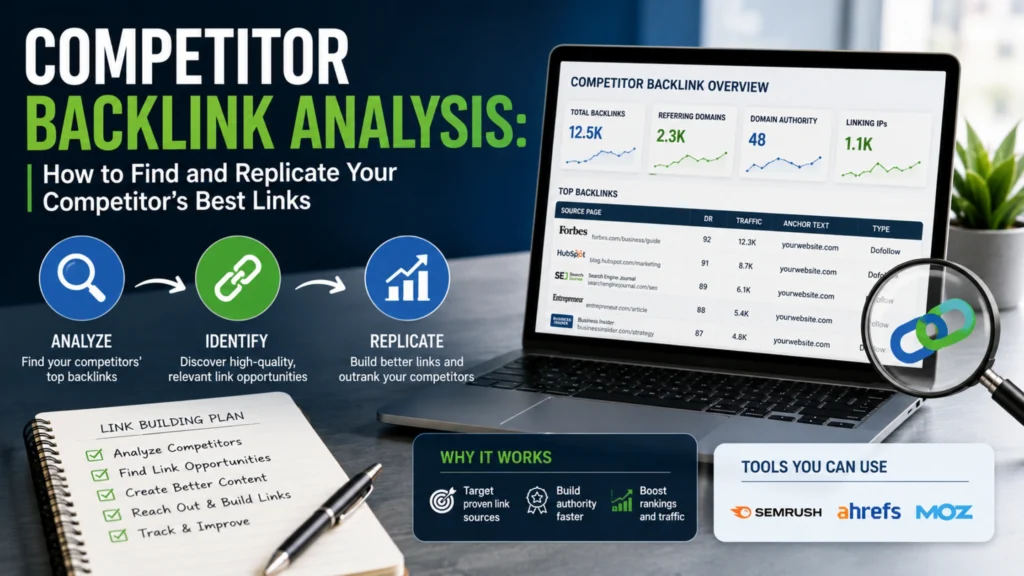
Competitor Backlink Analysis: How to Find and Replicate Your Competitor’s Best Links
Competitor backlink analysis is the process of studying where your competitors get their backlinks from…

CodeFyze
July 30, 2026
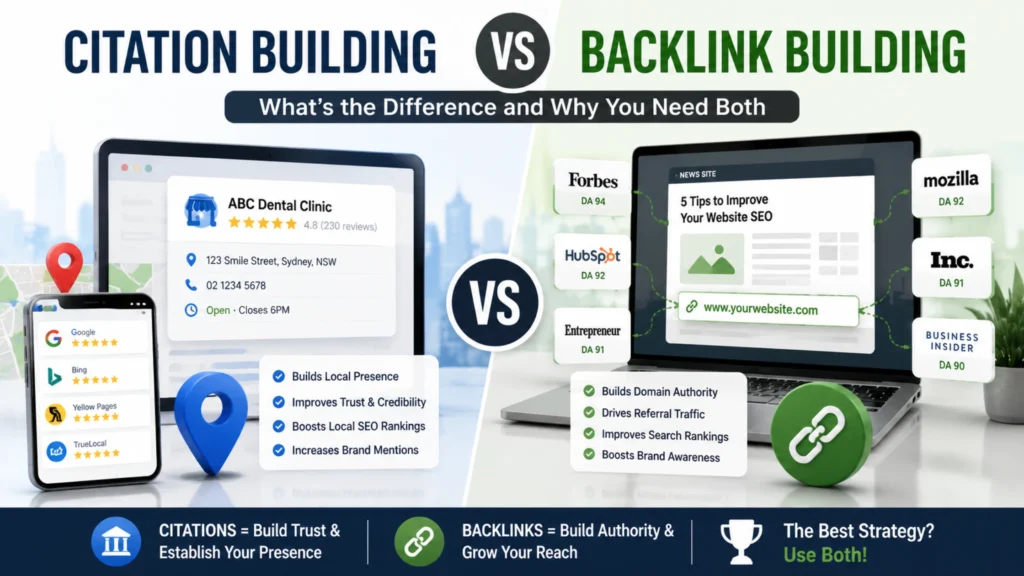
Citation Building vs Backlink Building: What’s the Difference and Why You Need Both
Citation building involves listing your business’s name, address, and phone number (NAP) consistently across online…
CodeFyze
July 29, 2026

HARO/Journalist Outreach: Getting Backlinks from News and Media Sites
HARO link building is the process of earning high-authority backlinks by responding to journalist queries…
CodeFyze
July 29, 2026
Questions? Reach us on Whatsapp +971 55 265 4401 Or Email info@codefyze.com
Questions? Reach us on Whatsapp +44 798 504 1813 Or Email info@codefyze.com
< recent blogs >
Latest Insights & Articles
Explore our latest articles, tips, and insights all in one place.
#BacklinkAnalysis, #CodeFyze, #CompetitorSEO, #DigitalMarketing, #LinkBuilding, #OffPageSEO, #SemrushSEO, #SEOStrategy, #SEOTools
Competitor Backlink Analysis: How to Find and Replicate Your Competitor’s Best Links
Competitor backlink analysis is the process of studying where your competitors get their backlinks from…

CodeFyze
July 30, 2026
#BacklinkBuilding, #CitationBuilding, #CodeFyze, #DigitalMarketing, #GoogleBusinessProfile, #LocalSEO, #NAPCitations, #SEOStrategy
Citation Building vs Backlink Building: What’s the Difference and Why You Need Both
Citation building involves listing your business’s name, address, and phone number (NAP) consistently across online…
CodeFyze
July 29, 2026
#BacklinkStrategy, #CodeFyze, #ContentMarketing, #DigitalPR, #EEAT, #HARO, #JournalistOutreach, #LinkBuilding
HARO/Journalist Outreach: Getting Backlinks from News and Media Sites
HARO link building is the process of earning high-authority backlinks by responding to journalist queries…
CodeFyze
July 29, 2026